

Continuing education (CE) is a licensing requirement for therapists, counselors, social workers, and psychologists in every U.S. state. The number of credits, approved providers, and topic mandates vary by state and profession, but the obligation is universal. This guide covers what your licensing board expects, where to find free and affordable CE credits, and how to turn CE from a checkbox into actual clinical growth.
I’m licensed in two different states and practice virtually in both. One state requires 2 hours of suicide prevention for renewal. The other requires 6 hours of Ethics. Keeping track of two sets of rules taught me early: checking your state licensing board’s requirements before you start collecting credits is not optional. It saves you from arriving at renewal with hours that don’t count.
The mental health field changes constantly. Methods and interventions evolve, and mental health professionals must adapt and grow in their profession. One of the benefits of being in the mental health field is that there are always new things to learn.
Why Continuing Education Matters for Therapists
Continuing education helps counselors and mental health clinicians learn new skills, fulfill requirements for licensure, and serve their clients more effectively. You can obtain certification or build competency in specialized modalities such as EMDR, Accelerated Resolution Therapy (ART), Emotionally Focused Couples Therapy (EFT), Internal Family Systems (IFS), CBT, or DBT. Many of these modalities directly strengthen the therapeutic alliance, which research consistently links to better client outcomes.
Strengthen your therapeutic relationships

Continuing education can also help you grow professionally alongside advancements in the field. When the pandemic started, many mental health professionals switched to telehealth services, and new regulations made it easier for many people to open private practices. Therapists who obtained continuing education on telehealth requirements and updated laws were better prepared for those changes.
For some mental health professionals, continuing education can advance your salary. Improving your skills or learning a new modality can help you better serve clients, and your specialized skills may allow you to charge more for your expertise.
Research on psychologists has emphasized the role that mental health professionals play as lifelong learners [1]. The authors suggest that becoming a lifelong learner involves humility and can help you develop critical thinking skills that minimize biases. Lifelong learning and humility apply across counseling, social work, psychology, and marriage and family therapy.
Professional development through continuing education can also benefit you and your clients by improving the therapeutic alliance. The growth of knowledge and skills you gain can help you feel more confident when working with clients. But knowing where to focus that growth is half the challenge. Tools like Alliance Genie, which surfaces clinical blind spots from your actual sessions, can show you patterns you might not notice on your own: moments where attunement dropped, communication habits that weaken rapport, or alliance dynamics that suggest a specific modality or skill area worth pursuing in your next CE course. Attending in-person or online CE events can then expand your professional network and generate referral sources.
Continuing Education Requirements by State and Profession
Continuing education requirements are profession-specific and state-dependent. Missouri, for example, requires 40 continuing education credits every two years, with only 20 of those hours allowed as self-study activities and the other 20 as formal education credits. Other states have different hour counts, topic mandates (ethics, suicide prevention, cultural competency, child abuse reporting), and rules about which providers they accept.
Some state licensing boards accept continuing education credits only if the training is approved by certain accrediting bodies. Marriage and Family Therapists may be able to count APA-approved training, but other licensing boards may not accept it. It is up to you to know what your licensing board does and does not accept.
Professional organizations that commonly approve CE credits include the National Board of Certified Counselors (NBCC), the American Psychological Association (APA), the Association of Social Work Boards (ASWB), the American Association for Marriage and Family Therapy (AAMFT), the American Counseling Association (ACA), the National Association of Social Workers (NASW), and the National Association of Alcoholism and Drug Abuse Counselors (NAADAC).
Always verify with your state licensing board before purchasing courses. Not all courses, even free ones, will meet your state-specific requirements.
Where to Find Free and Low-Cost CEUs for Counselors, Therapists, and Social Workers
Free and low-cost continuing education does exist, and it is legitimate. Whether you need free CEUs for counselors, low-cost CEUs for LPCs, MFTs, psychologists, or social workers, there are approved providers offering unlimited access for under $100 per year. The key is verifying that the specific course and provider are accepted by your state licensing board before counting them toward renewal.
Free CE Through Professional Organizations
The ACA offers 12 free continuing education credits annually to members, one free credit per month [2]. If you’re in a two-year renewal cycle, that covers over half your CEs for free.
The APA offers five free CE credits to psychologist members through the APA CE Corner article series [3]. Find an article that interests you, take a test, and receive a CE certificate.
The NASW offers discounted continuing education credits for its members through online continuing education institutes [4].
The AAMFT offers an online education system called Teneo that members and non-members can access [5]. Courses cost $15 to $25 for members.
The American Psychiatric Association offers an online learning center with live events and pre-recorded events that anyone can access [6].
Budget CE Providers (Under $100/Year for Unlimited Access)
CE4Less offers an unlimited subscription at $89.99 per year [7]. They are approved by APA, ASWB, NBCC, NAADAC, and many state boards. They currently offer a free course on “Ethics and Boundary Issues” worth five credit hours.
Clearly Clinical is a woman-owned provider that offers credits through podcasts [8]. Membership costs $130 per year for unlimited courses. They also offer free continuing education podcasts without a membership, covering diverse and affirming topics. Sign up, listen, pass a quiz, and earn credit.
Therapy Trainings offers a full year of free continuing education credits to mental health graduates from the last six months [9]. For non-graduates, they offer a free three-credit course on Avoiding Burnout. Regular membership runs about $75 per year for 100+ CE courses.
Quantum Units Education offers a membership at $74.95 per year for unlimited credits, with over 200 courses available [10].
The Integrative Psychiatry Institute offers 25 CE credits for free when you sign up for their “Future of Psychotherapy” course bundle, approved by NBCC [11].
AATBS offers continuing education packages at competitive rates, including free courses for multiple license types [12].
GoodTherapy offers continuing education courses for counselors at various price points [13].
How the Major Platforms Compare
| Platform | Annual Cost | Free Option? | Approvals | Best For |
|---|---|---|---|---|
| CE4Less | $89.99/year unlimited | 1 free ethics course (5 hrs) | APA, ASWB, NBCC, NAADAC | Budget-conscious therapists needing broad CE |
| Quantum Units | $74.95/year unlimited | Free CEU samples | NBCC + others | Lowest annual cost for unlimited access |
| Therapy Trainings | ~$75/year | Free year for new grads; 1 free course | Standard | New graduates and early-career clinicians |
| Clearly Clinical | $130/year | Free podcast episodes with CE | ASWB/NBCC | Therapists who prefer audio learning |
| ACA membership | Varies by membership | 12 free credits/year (members) | ACA, NBCC | Counselors already paying ACA dues |
| PESI | Per event ($124-$459+) | None | ASWB ACE + others | Deep modality training (EMDR, trauma, somatic) |
| NetCE | $89/year ($199 with live) | None | ASWB, APA, NBCC | Large library, homestudy focus |
| Agents of Change | $99/year | None | ASWB ACE, NBCC | Live events included (15+/year) |
| Zur Institute | $19-$199/course | None | Standard | Ethics and niche specialty topics |
What If You Want Training in an Expensive Modality?
Some modalities are not cheap. EMDR training often costs $1,500 and up. IFS, ART, and other specialized modalities can cost thousands of dollars. That said, these additional trainings are often worth it for the quality of training and the knowledge you can apply with clients.
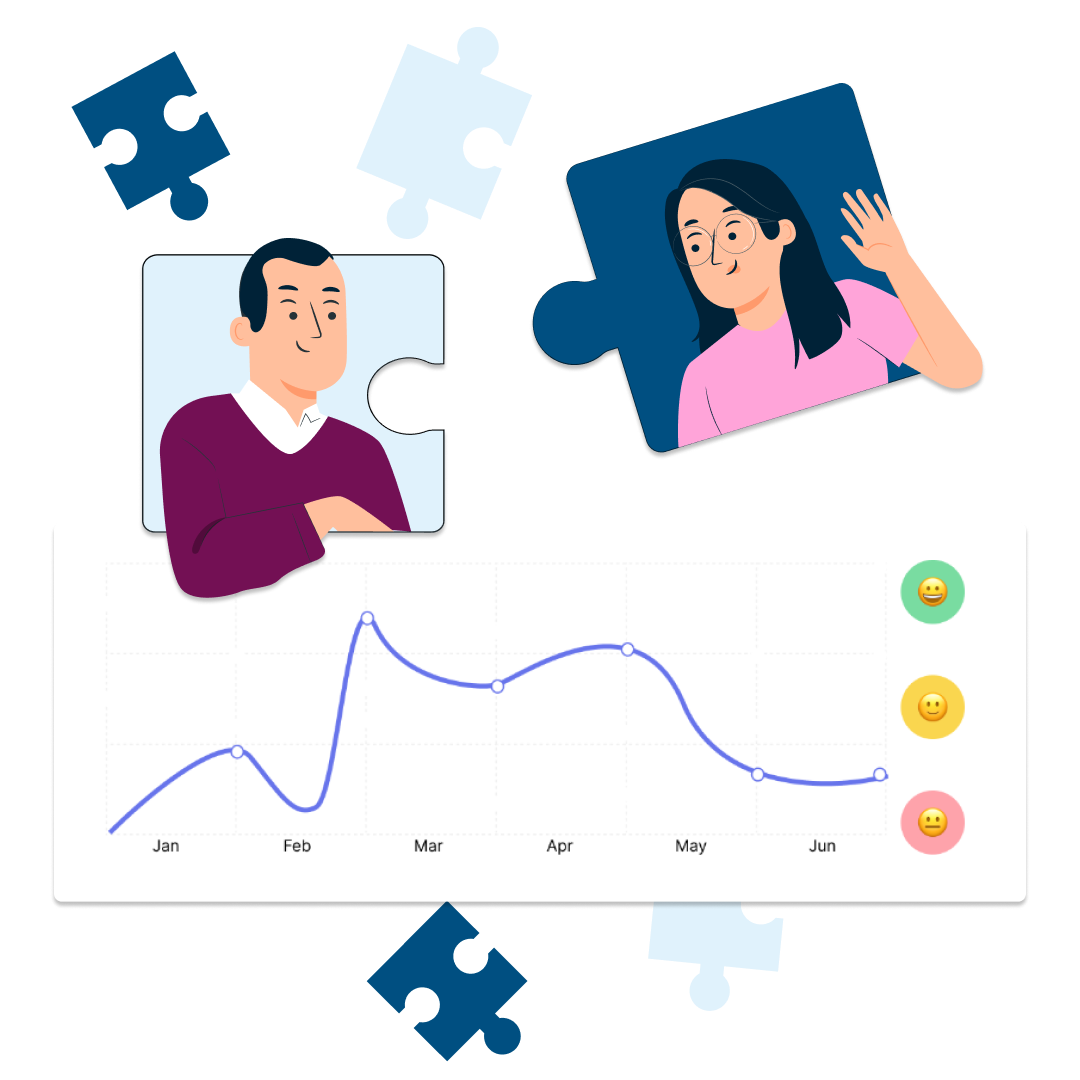
Deepen your therapeutic alliance through insight and reflection
- Evidence-based tools
- Auto-captured areas for growth
- Alliance signals
- Supervision-like insights
If you want to pursue an expensive modality on a budget, you have options: check with your state board for discounts or free training, ask professional organizations about member pricing, look for payment plan options, or contact the program organizer about customized payment terms.
Continuous Clinical Growth: Making CE Actually Land
CE courses teach concepts. The harder part is knowing whether you are actually applying them in session. Most therapists have taken a workshop on motivational interviewing or trauma-informed care, felt inspired, and then struggled to tell whether their clinical work changed afterward. That gap between learning and doing is where most CE investment gets lost.
How Alliance Genie Turns CE into Measurable Growth
Mentalyc’s Alliance Genie is a clinical growth tool built into the note taker. After each session, it analyzes the therapeutic alliance and surfaces insights you might miss on your own: where rapport strengthened, where attunement dropped, communication patterns that recur across clients, and specific areas where your clinical skills could develop further.
This creates a feedback loop that traditional CE cannot provide on its own:
- Before CE: Alliance Genie shows you your actual blind spots. A therapist who keeps seeing alliance ruptures around goal-setting might realize they need training in collaborative treatment planning. A clinician whose attunement scores drop with certain presentations might seek out CE in trauma-informed approaches or core conditions like empathy and congruence. Instead of picking CE courses that sound interesting, you pick courses that address what your sessions actually reveal.
- After CE: You take the workshop. You learn the technique. Alliance Genie then shows you whether it is showing up in your work. Did your alliance patterns change? Are the ruptures less frequent? You can track this over time using structured measures like the Session Rating Scale (SRS) or the Working Alliance Inventory (WAI). This is something no CE provider can offer on its own, because it requires data from your real sessions, not a post-test.
The two work together. CE gives you new tools. Alliance Genie shows you how you are using them, session after session. That is the difference between collecting credits and actually growing as a clinician.

How Mentalyc Creates Space for Growth
Alliance Genie runs alongside Mentalyc’s AI-generated clinical notes. The note taker handles documentation (SOAP, DAP, BIRP, and other formats from session audio in under two minutes), while Alliance Genie handles the growth side. Both run from the same session recording. There are tools that automate documentation, but few that also use that same session data to help you develop as a clinician.
Mentalyc is HIPAA compliant and SOC 2 certified, and session audio is deleted after note generation.
When evaluating any clinician training software or growth tool, consider whether it connects to your real sessions (not just theory), whether it helps you see patterns you would miss on your own, and whether it fits into your workflow without adding hours to your week.
Why other mental health professionals love Mentalyc

“I really like that the treatment plans make sense, and they’re based on the case notes I’ve been entering.”
Therapist

“The treatment plan gives me a place to look with clients and say, here’s where we are and here’s where we’re aiming to go. It’s such a huge help.”
LPC

“If I were recommending this software to a colleague, I would tell them that it is the best thing that they could do for their practice.”
Licensed Professional Counselor

“It immediately changed my quality of life, personally and professionally.”
Owner/Independently Licensed Marriage & Family Therapist (LMFT)
How to Choose the Right Continuing Education
Search by Topic or Modality
If you want to learn more about a specific approach, such as emotionally focused couples therapy, search for that topic directly or check whether your professional organization offers training on it. Social media groups where therapists share upcoming trainings are another resource. Networking with other professionals online is a practical way to discover training opportunities.
I’m a member of the Society for Sexual, Affectional, Intersex, and Gender Expansive Identities (SAIGE), a branch of the ACA. I chose that membership to expand my knowledge of working with LGBTQIA+ communities, which makes up a significant portion of my caseload. SAIGE offers live webinars throughout the year and recorded self-paced webinars for CE credit. If you work with specific populations, tailoring your training to the clients you serve most helps you grow in areas that are directly relevant.
Look for Local Opportunities
Many mental health agencies offer continuing education for their clinicians and invite professionals outside their agency. Facilities sometimes sponsor training or bring in speakers on a specific topic. Learning about opportunities in your area is a practical way to build skills and local professional connections at the same time.
Use Consultation and Supervision
Consultation groups and supervision can count toward professional development and offer something CE courses sometimes do not: a fresh perspective on a specific case. These settings can help you view client situations differently or point you to resources you might not have found on your own.
Self-Reflection as a Professional Development Tool
The ability to self-reflect and understand your strengths and limitations is essential for ongoing growth. Continuing education helps you identify gaps in your knowledge, and you can then fill those gaps with targeted training. But self-reflection alone has limits. It is hard to see your own blind spots. Session recordings, peer consultation, and tools like Alliance Genie that analyze your real session dynamics can surface patterns that self-reflection alone might miss, helping you choose CE that addresses your actual growth areas rather than topics that just sound interesting. Clinicians who stay self-aware can better serve their clients and stay current on new procedures and policies.
Frequently Asked Questions
References
[1] Washburn, J., et al. (2022). The Central Role of Lifelong Learning and Cultural Humility in Clinical Psychology. https://journals.sagepub.com/doi/10.1177/21677026221101063
[2] American Counseling Association. Continuing Education. https://www.counseling.org/
[3] American Psychological Association. CE Programs in Psychology. https://www.apa.org/
[4] National Association of Social Workers. https://www.socialworkers.org/
[5] American Association of Marriage and Family Therapy. https://www.aamft.org/
[6] American Psychiatric Association. https://www.psychiatry.org/
[7] CE4Less. https://ce4less.com/
[8] Clearly Clinical. https://clearlyclinical.com/
[9] Therapy Trainings. https://www.therapytrainings.com/
[10] Quantum Units Education. https://www.quantumunitsed.com/
[11] Integrative Psychiatry Institute. https://psychiatryinstitute.com/
[12] Association for Advanced Training in the Behavioral Sciences. https://aatbs.com/continuing-education
[13] GoodTherapy. Continuing Education for Counselors. https://www.goodtherapy.org/continuing-education-for-counselors.html